Over the weekend, Washington's message on Iran softened: Secretary of State Marco Rubio said President Trump has not decided on further strikes and would prefer a diplomatic way out. By Monday morning, crude had dropped 4% and WTI had slipped back under $100. That looks like peace getting priced. It isn't, quite. The prediction markets that pay out only on whether the U.S. strikes Iran barely moved, and still see close to even odds of a strike by mid-November. On Sunday evening, a tanker was struck by two projectiles deep inside the Gulf, far from Hormuz. One market moved with the mood. The other read the calendar. Today's Sip is about which one is right, and who pays if it's the wrong one. 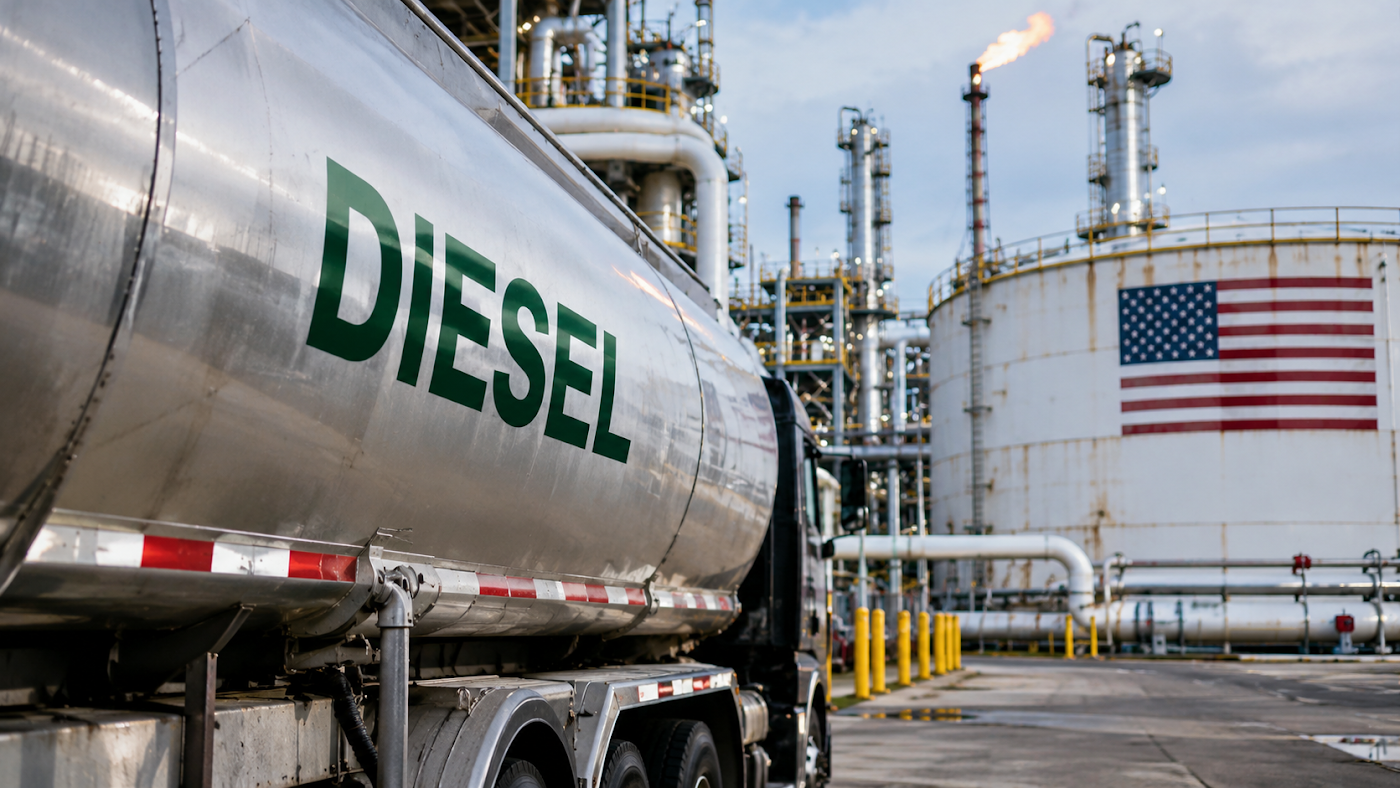
But before we get to that, let's take a quick look at the markets and what matters today… 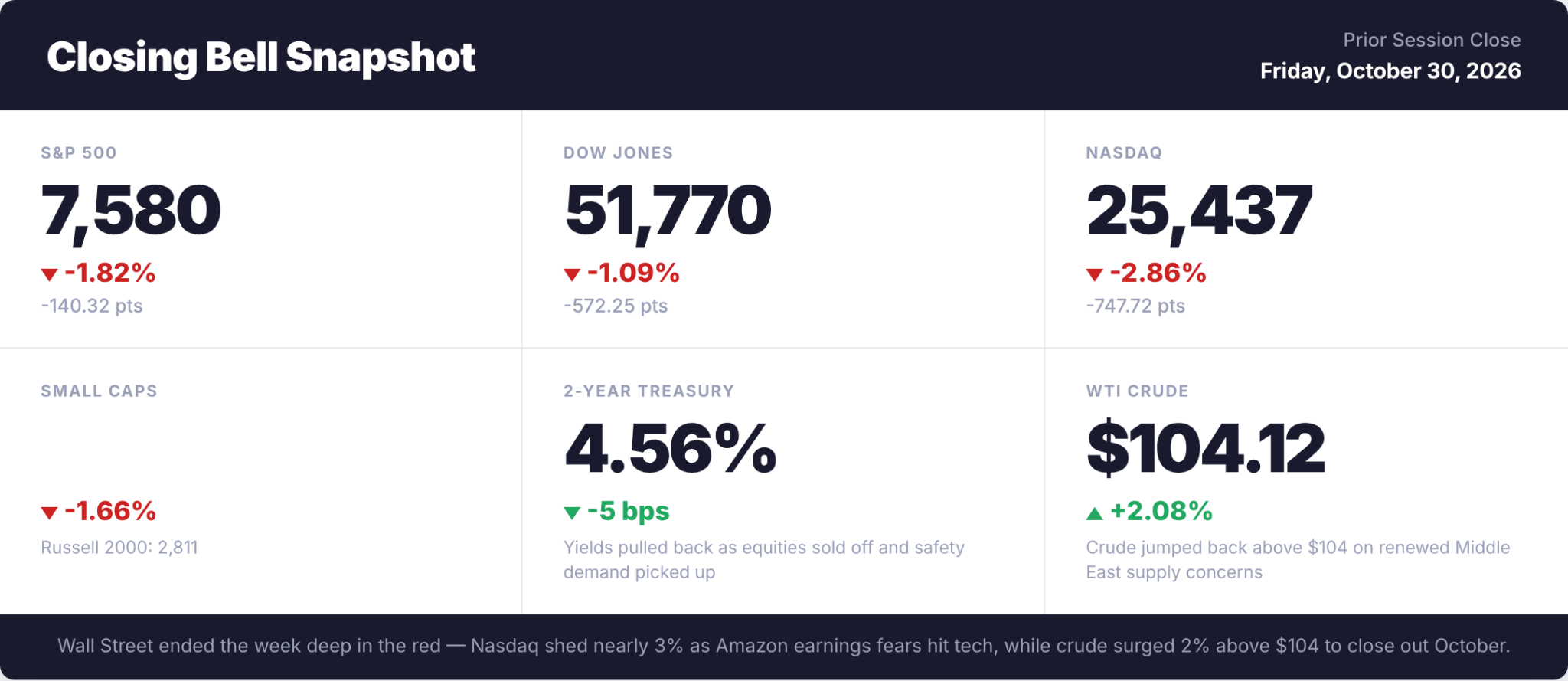
3 Movers in 3 Minutes 1. Binance reopened. A net 2.1% walked out. Binance restored withdrawals on all 15 of its first-phase networks on Sunday, three days after a $6.3 billion theft. In the first nine and a half hours, customers pulled $4.65 billion and deposited $1.01 billion, Binance said, a net outflow of about $3.64 billion, or 2.1% of the $171 billion it says it holds. An outside on-chain tally from DefiLlama, a different measure over a full day, put net outflows at about $5.8 billion. The mix says more than the total: stablecoins led the withdrawals, so customers appeared to be leaving the venue rather than selling crypto. Late Sunday, the thief also moved its roughly $290 million of stolen XRP to new wallets for the first time, six by one tracker's count, a token no issuer can freeze. The 2.1% is Binance's own count; the outside check on flows is the on-chain tally, and on that measure the exit was bigger. The independent test of the backing is the zero-knowledge reserves proof due Tuesday. 2. One stake, two price tags. A group led by Blackstone's (BX) credit and insurance arm, alongside CPP Investments, OMERS, IMCO and PSP Investments, agreed to buy 49.9% of the Mitsubishi holding company that owns 15% of LNG Canada. Blackstone says the group will invest $3.1 billion. Mitsubishi says the deal is valued at about $1.6 billion. Neither has explained the gap. The structure is the real news: a group led by a credit and insurance arm is taking an equity-like, non-controlling stake in an operating gas asset, while Mitsubishi keeps control and all of its gas. The same morning, Apollo (APO) launched a European lender with more than €10 billion of lending capacity, backed by the Abu Dhabi Investment Council and Japan's Norinchukin Bank, among others. Private credit started the week acting like a bank in Europe and a part-owner in Canada. 3. Affle is buying Perion, partly with Perion's money. Perion Network (PERI) agreed to sell itself to India's Affle 3i for $11.70 a share in cash, a 34.5% premium to Friday's $8.70 close and about $420 million in equity value. But Perion held $228.3 million of cash and securities at the end of September and, Affle says, no financial debt. Strip out the cash and Affle is paying about $192 million for the business, roughly 3.7 times the adjusted EBITDA Perion still guides to for 2026. That looks cheap until you check the math: hitting that guidance requires about $48.8 million in the second half, after $3.2 million in the first. 3 Signals for Today Apple's first report under John Ternus lands after the close. Wall Street expects about $1.99 a share on roughly $113.4 billion of revenue from Apple (AAPL). The number matters less than the gross-margin guide. Intel (INTC), which warned Thursday that memory prices and supply were slowing PC sales, lost more than a quarter of its value on Friday. Apple buys memory for every iPhone and Mac. If its outlook absorbs those costs without denting margins, Friday's selloff in device and chip names looks overdone. If it flags them, the memory squeeze stops being a PC story. Palantir (PLTR), down 6.3% on Friday, reports alongside it, with AMD (AMD) on Tuesday.
ISM manufacturing prices paid, then Washington's borrowing estimate. Last month's prices-paid reading was 77.9, and October's survey covers a month when Brent rose about 13.6%. A hot print would land on a market that already prices roughly a 72% chance of a December Fed hike, and it would be a reminder that October's oil costs are already moving through factories, whatever crude does this morning. Later today, the Treasury publishes its borrowing estimates, the first hard number ahead of Wednesday's refunding announcement. Together they set the price of money for a bond market already absorbing heavy AI-related debt sales.
The Senate trades near 74 cents, and Alaska controls the clock. On the eve of the midterms, Kalshi's contract on Democrats winning the Senate has climbed to 74 cents, with Polymarket near 72.5 cents. Much of Kalshi's overnight climb came from what appeared to be a single order of about 237,900 contracts, with no poll or headline attached to it. The bigger issue is timing. Control could come down to Alaska, where counting can take weeks, so some of the more than $1.4 billion staked on the midterms may not settle on election night. Traders at 74 cents are betting on the result and on their own patience.
And with that out of the way, let's get to today's big story: why oil's 4% drop may be pricing a delay, not a deal. The SipOil fell 4% after a weekend of diplomacy reports. The tankers are still getting hit.Here is the weekend in one sentence: Washington signaled it would rather talk than strike, at least for now. Secretary of State Marco Rubio said Trump has not decided on further strikes against Iran and would prefer to resolve the conflict diplomatically. Trump himself said the U.S. is "not in that much of a hurry," and in October he said there would be no new strikes before the midterms. Crude fell as those signals piled up. By early Monday, Brent had fallen more than 4% to near $108 a barrel, and WTI had dropped below $100, giving back part of Brent's roughly 13.6% October rally to a six-month high. Other things were in play too: OPEC+ left its output targets unchanged on Sunday, and one analyst called the move a technical pullback after October's run. The headline reads like de-escalation. Look underneath and the weekend changed the timing, not the facts. The market that only asks one questionPolymarket runs contracts on whether the U.S.-Iran ceasefire holds. They resolve "No" only if the U.S. carries out an air or missile strike that directly hits Iran by the deadline. No tanker incidents, no diplomacy headlines, no oil prices. One question. Over the same stretch that crude fell 4%, the contract on the ceasefire holding through Nov. 15 moved from 52.5 cents to 54 cents. That still implies roughly a 46% chance of a U.S. strike by Nov. 15, effectively in the 12 days after the vote. The Nov. 8 contract implies about 25%. That gap is the story. The ceasefire traders appeared to have assumed nothing would happen before Tuesday, and nothing over the weekend told them what happens after it. Oil, by contrast, carries a premium that responds to the overall temperature of the conflict. Friendlier signals cool the temperature. They do not move the decision. A caveat worth keeping: the Nov. 15 contract is thin, with only about $53,000 traded in a day. But the deeper Nov. 8 contract tells the same story, and its liquidity more than doubled overnight. The Gulf did not quiet downIf the weekend were a true de-escalation, the water would show it. It didn't. On Sunday evening, the UK Maritime Trade Operations center reported that a tanker was struck by two unknown projectiles about 72 nautical miles off Ras Al Khafji, on the Saudi coast. The crew was safe. The location matters more than the damage. That is the northern Gulf, hundreds of miles from the Strait of Hormuz, the chokepoint at the center of this war's shipping risk. Diplomatically, the picture is open, not closed. Foreign Minister Abbas Araghchi said consultations with Qatari mediators over a "two-day plan" were continuing, with no final outcome yet. He has described a sequence in which the U.S. moves first and Hormuz reopens the day after. Washington has not publicly accepted it. And on Monday Iran's foreign ministry spokesman put the condition plainly: Hormuz cannot reopen unless the U.S. naval blockade ends. "The ball is in the U.S. court," he said. FROM OUR SPONSORS 
Still Using Last Year's Stock List?A lot of investors are still buying off a "top stocks" list someone made a year ago. Markets move faster than that. Our Top 10 Stocks to Buy This Quarter is rebuilt from scratch every quarter. Fresh picks. Fresh reasons. Fresh risks to watch. See the latest edition, free. None of that is a deal. All of it is a reason to hope for one. Oil priced the hope. The ships are still pricing the risk. Who the $4 actually matters toStart with the Fed. Futures still price about a 72% chance of a December rate hike. Cheaper oil is one way out of that hike, but only if the drop lasts. A one-day slide won't move an inflation forecast. A month of sub-$100 crude would. Then the producers. Exxon (XOM) and Chevron (CVX) touched record highs on Friday, and Exxon's refining arm earned more last quarter than its oil and gas business. Its windfall comes from a world short on fuel, not just from expensive crude. A softer barrel trims the premium. It does not reopen refineries or shipping lanes. The clearest exposure belongs to the buyers. Ryanair (RYAAY) reported this morning that it carried 6% more passengers and earned 15% less in its fiscal first half, with profit after tax falling to €2.15 billion. That was with 80% of this year's fuel hedged at about $67 a barrel. For the fiscal year starting next April, it has hedged only 25% of its needs, at about $95. On its own estimate, its fuel bill could rise by about €2 billion that year even after hedges, close to the entire half-year profit it just reported. Chief Executive Michael O'Leary expects fares to rise materially, then cautioned they may not fully cover the hit, and floated temporary pay freezes. That is the difference between a headline and a forward curve. A 4% drop on Monday helps Ryanair only if it holds long enough to reprice next year's fuel. One weekend of diplomacy can't do that. What would settle itThe oil market and the ceasefire market can't both be right for long. If talks are working, the ceasefire contracts should climb toward oil's optimism this week. If the decision has simply been pushed past Tuesday, crude has priced more relief than the facts support. Three things decide it: a U.S. response to Iran's two-day proposal, any strike decision after Nov. 3, and whether more incidents follow inside the Gulf. Until one of them moves, a $100 barrel is a forecast, not a floor. PARTNER SPOTLIGHT Why Did Trump Just Ban America's Most Powerful AI?It's not Nvidia. It's not OpenAI. It's not Google. It's a San Francisco AI lab whose technology is used by eight of the ten largest companies in America — and which Bloomberg calls the highest-revenue AI company on earth. Trump banned it from every federal agency and the Pentagon blacklisted it. The reason isn't what you think. Full details here. The Market Sips TakeawayWatch the Nov. 15 ceasefire contract alongside crude this week. If the contract climbs well above 54 cents while oil holds below $100, diplomacy is doing real work and the war premium can keep bleeding out, which would chip at the case for a December hike. If the contract stays stuck near even odds, oil's drop is a timing trade that can reverse the moment the vote is behind us. The tell to watch most closely is the water, not the wires: a quiet week in the Gulf would say more than any statement out of Washington or Tehran. And for anyone holding airlines or other heavy fuel buyers, Monday's drop is not the number that matters. Next year's hedges are. Until then, sip slowly! The Market Sip Desk Reply prompt: Oil moved on the mood. The ceasefire traders priced the calendar. Which market do you trust more this week, and why? Hit reply and tell us. Rates Just Reset. Who Feels It First?On January 2, the 10-year Treasury yielded 4.19%. By September 30, it was 5.29%. Most of that move landed in a single quarter.
The bond market repriced and companies are starting to report it. Some companies earn from higher rates. Some pay for them. And each one runs on a different clock. We traced three of them, IBKR, WRB and FIS, in a new FREE Special Report:
Rates Just Reset. Who Feels It First? Who earns it fast. Who earns it slowly. Who pays. One has already reported. The other two report next, and the report tells you the exact line to check. We'll text the report straight to your phone. Get the Free Report by Text → | 


