


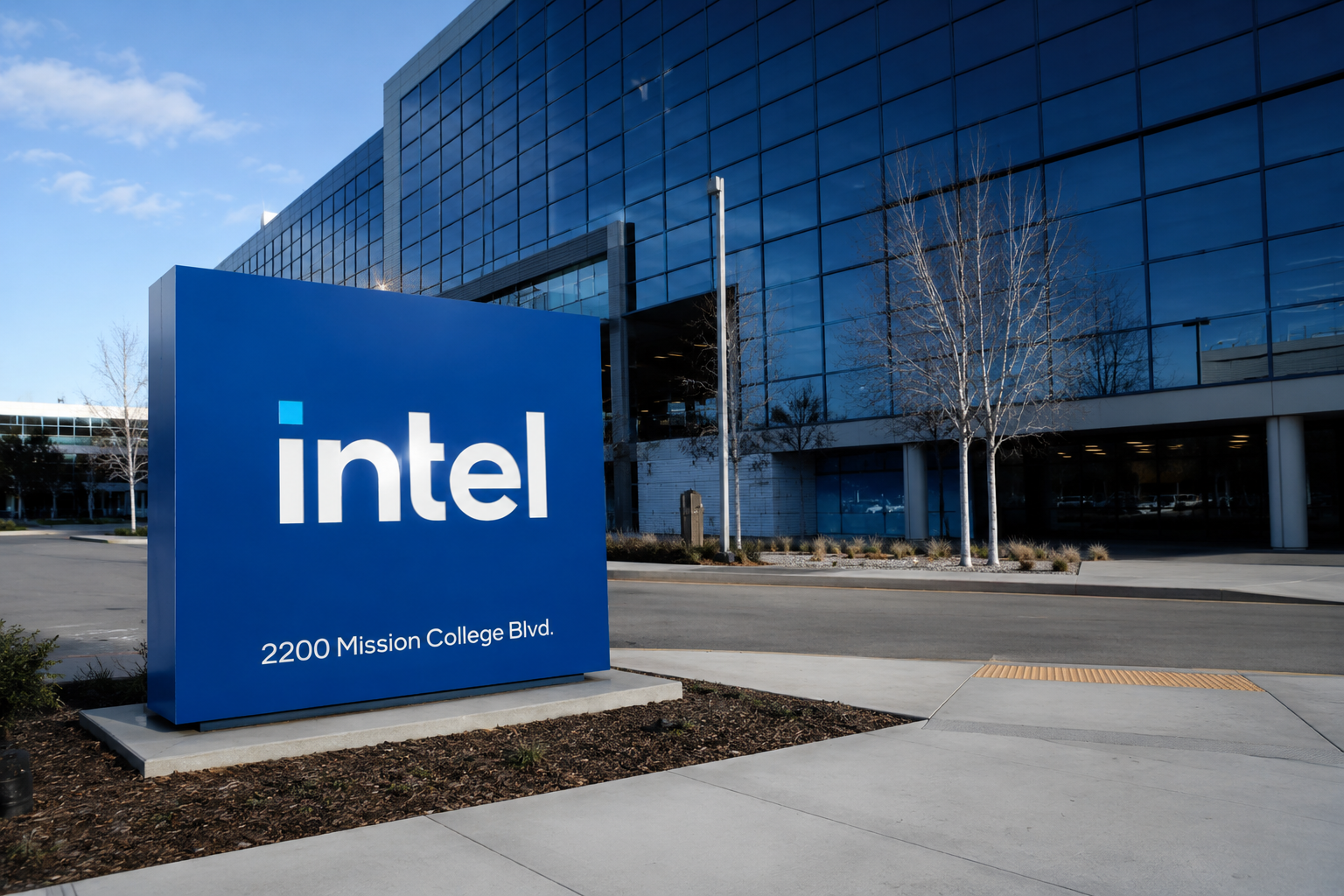
One year ago, the president publicly demanded Intel's CEO resign. Two weeks later, the US government took a 10% stake in the company at $20.47 a share. Yesterday, Intel sold $20 billion of new stock at $95. Taxpayers are up roughly $32 billion in paper terms. Intel just executed the largest tech equity raise in US history. And nothing about the business fundamentals explains the gap. So what does?
But before we get to that, let's take a quick look at the markets and what matters…
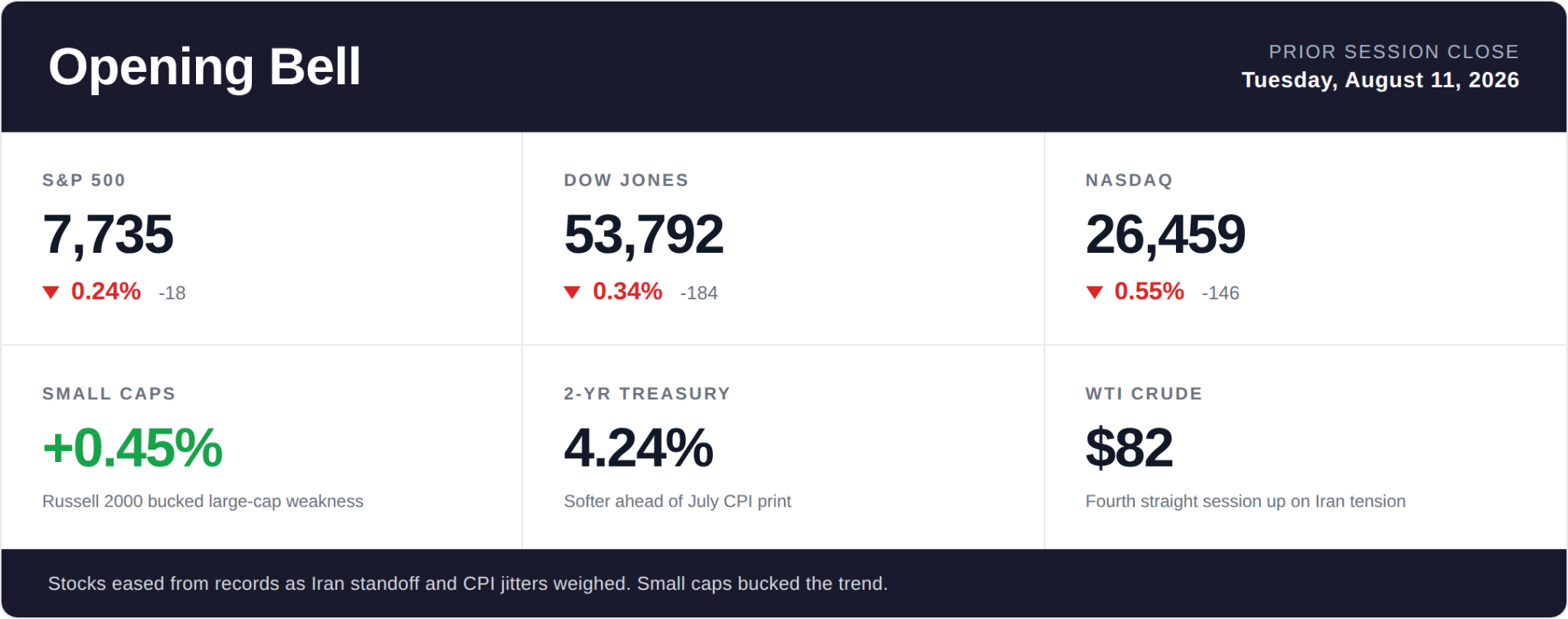
3 Movers in 3 Minutes
1. CoreWeave prints the AI backlog everyone was waiting for. CoreWeave Inc. (CRWV) reported Q2 revenue of $2.58 billion, up 112% year-over-year, and disclosed that its revenue backlog swelled from $104 billion at quarter-end to $129 billion by August 11, an extra $25 billion of contracted demand in six weeks. Shares jumped over 11% after hours. Net losses widened to $626 million, dragged by $640 million in interest expense. The market read the growth. The bond market is reading the leverage.
2. Alphabet slides 3.6% into its own launch day. Alphabet Inc. (GOOGL) closed at $343.00, down nearly 4%, dragging the Nasdaq lower ahead of Google's Made by Google Pixel 11 event tonight. The pressure came from three directions at once: a $25 billion senior notes offering closed Monday, DeepMind lost chief scientist Jeff Dean to a new venture, and French publishers filed a fresh antitrust complaint over AI Overviews. When your capex hits $205 billion for the year, every talent departure gets priced.
3. Trump Media's crypto bet backfires on the P&L. Trump Media & Technology Group (DJT) reported a $238 million Q2 net loss, up from just $20 million a year earlier, driven by unrealized losses on its cryptocurrency holdings. The same FASB mark-to-market rule that lifted Alphabet's Q2 EPS in July just cut the other way here. The rule doesn't care which way the tide moves. Neither do the auditors.
3 Signals for Today
1. July CPI at 8:30 AM ET. Headline expected at 3.4% year-over-year, core at 2.5%, per the Reuters poll. Markets are pricing a 51% probability of a 25 basis point Fed hike in September, up from 44% a day ago. A hot print will not just move yields. It will decide whether Intel's raise looks well-timed or precisely lucky.
2. Google's Pixel 11 event at 6:00 PM ET. The first Made by Google keynote after the DeepMind reorganization. Investors watching for how much of Gemini's roadmap the new leadership actually owns.
3. Intel Corporation (INTC)'s $20 billion offering closes today. Roughly $19.7 billion in net proceeds hit the balance sheet. The share count jumps by 210.5 million, a 4.9% dilution. Watch how the government's stake gets reported after the close.
When the Fed Cuts, These Go First
The rate-cut rally is already taking shape, and our analysts just pinpointed 10 stocks most likely to lead it.
They’ve dug through every chart, sector, and earnings trend to find companies positioned for explosive upside once the Fed eases.
From AI innovators to dividend aristocrats, these are the names attracting billions in early institutional money.
Miss them now, and you’ll be chasing the rally later.
Get the Top 10 Best Stocks to Own in the Second Half of 2026 — free today before the next leg higher begins >>
And with that, let's get to today's big story: how Intel just raised $20 billion from investors who wouldn't touch it a year ago.
The Sip
The company nobody wanted
On August 7, 2025, Donald Trump posted on Truth Social that Intel's CEO Lip-Bu Tan was "highly CONFLICTED" and "must resign, immediately." The stock dipped. Tan didn't resign. He requested a meeting at the White House.
Two weeks later, the US government owned 10% of Intel.
The deal was structured as a passive, non-voting stake: 433.3 million shares at $20.47 apiece, funded almost entirely by unpaid CHIPS Act grants that had been sitting in a Commerce Department drawer. Around the same time, SoftBank Group (SFTBY) kicked in $2 billion. A few months later, Nvidia Corporation (NVDA) added $5 billion in a private placement. On paper, Intel was being rescued. In practice, it was being reframed.
Yesterday, that reframing paid its most spectacular dividend. Intel priced 210.5 million new shares at $95, raising $20 billion in what was originally announced as a $15 billion deal on Monday. The offering drew more than $100 billion in institutional demand, roughly a 5-to-1 oversubscription. The taxpayer's cost basis is now $20.47. The market is paying $95.
Do the math on the government stake: $8.9 billion of grants converted into an asset now worth about $42 billion. Warren Buffett has had worse years.
The second IPO
What makes yesterday historic is not the size. It's that this is the first public share sale in Intel's entire 55-year history as a listed company. Intel went public on October 13, 1971, raising a little under $10 million from 64 underwriters at $23.50 a share. It never sold shares to the public again. Not during the microprocessor boom. Not during the internet build-out. Not during the mobile transition it famously missed.
For 55 years, Intel funded itself with cash flow, debt, and one of the most aggressive buyback programs in corporate history: $82 billion in share repurchases through the 2010s. It shrank its float on purpose. Yesterday, it expanded its float on purpose. Same company. Opposite direction. Different problem.
The company that spent a decade returning capital just spent a day accepting it.
The immediate use of proceeds is vague, deliberately so. The prospectus lists "general corporate purposes" alongside physical AI, purpose-built silicon, advanced packaging, and external wafers. In July, Intel raised its 2026 capex target to $20 billion from $18 billion. The Ohio fab alone accounts for over 25% of that. Which means yesterday's raise, in the roughest possible math, covers about a year of building.
But that's not really what the raise is about.
FREE Gold Ticker to Buy ASAP: (NYSE:___)
Jim Rickards – the world’s #1 gold expert – has just revealed one of his favorite gold plays… 100% FREE

As Jim sees it, we’re witnessing the biggest gold boom of the last 100 years – and those who keep their money on the sidelines are missing their chance at a fortune thanks to gold’s epic run.
But smart investors who get in now, could make 10X their money in the coming months.
What actually got financed
Intel's turnaround isn't finished. Q2 revenue came in at $16.1 billion, up 25% year-over-year, the fastest growth in over 15 years. But operating margins are still recovering. The 14A process node, the one meant to compete head-on with Taiwan Semiconductor Manufacturing (TSM), isn't slated for high-volume production until 2028. Tesla Inc. (TSLA), the marquee foundry customer, signed on for that same node. It's a promise dated two years out.
What the market bought yesterday wasn't the business. It was the umbrella.
Between the government's 10% stake, SoftBank's $2 billion, and Nvidia's $5 billion, Intel became something unusual in modern capital markets: a company with a soft floor under it. Not a guarantee. Not a bailout. Something more subtle. The state, the largest private tech investor in Asia, and the largest chip designer in the world had all publicly declared they wanted this company to survive.
That's the umbrella. And once the umbrella went up, the AI narrative did the rest. Intel is now trading at what analysts flagged as a five-fold increase in twelve months. The share sale was priced at a 6.5% discount to Friday's close, and the book still ran five times oversubscribed. That is not a fundraising. That is a queue.
The Long Angle
There's a version of this story that reads as vindication for American industrial policy. Chrysler in 1979 borrowed $1.2 billion with a federal guarantee and paid it back with $500 million in Treasury profit. GM in 2008 got $50 billion and cost taxpayers roughly $11 billion. Intel in 2025 got its grants converted into equity, and the position is now up more than 4x on paper.
But that's the easy read. The harder question is what happens next.
The US government holds a passive, non-voting stake. It has already signaled it is not participating in the current secondary offering, which mechanically dilutes its position from 9.9% down toward roughly 9.4%. That is a choice. The Commerce Department could have topped up. It didn't. Someone, somewhere in Washington, decided that letting the private market carry the next leg of the rally was the smarter play. And someone else will eventually decide when to sell.
The larger reframe is this. When the government becomes a shareholder, it also becomes a signal. Every subsequent capital markets action gets read against the state's position. Yesterday's oversubscription wasn't only about Intel. It was a bet that the government wouldn't let its investment fail, and that the AI capex cycle would keep bidding for domestic manufacturing capacity. Both bets could still be wrong. But right now, they're being priced as if they can't be.
Fifty-five years ago, Intel raised $10 million to build the first commercial microprocessor. Yesterday, it raised $20 billion to build the machine that trains everything else. The company went public, twice, on either side of the same story. And the market only ever pays attention to which side it thinks is starting.
Navellier Warns: This Could Leapfrog Elon's SpaceX IPO

Elon Musk could take SpaceX public in 2026, at an estimated $1.75 trillion valuation. The IPO would include Elon's AI model, Grok. But according to Louis Navellier, a radical new AI model will launch this year… over 1,000 times more powerful than Elon's. And the company behind it could outperform SpaceX in the process.
Click here for full details (including Louis' new pick — free).
This ad is sent on behalf of InvestorPlace Media at 1125 N. Charles Street, Baltimore, Maryland 21201. If you're not interested in this opportunity, please click here.
The MarketSips Takeaway
Watch for two moves in the coming weeks. First, whether Intel's dilution shows up in the multiple or whether the AI narrative absorbs it, which will tell you how much of yesterday's demand was speculation versus conviction. Second, whether Congress or Treasury raises the question of when the government sells. Once that conversation begins, the ceiling on Intel's rally becomes a political question, not a market one. And political ceilings tend to arrive earlier than market ones.
The bigger lesson is quieter. Industrial policy is no longer only about grants and tariffs. It's about equity. When the state takes a stake in a company, the state also takes a stake in that company's rally. The interests of taxpayers, shareholders, and voters are now stitched into the same cap table. That's a genuinely new arrangement in American capital markets. Anyone who thinks that stitching comes without consequences hasn't watched a Treasury exit before.
Until then, sip slowly!
The Market Sip Desk
Reply prompt: Would you have participated in yesterday's Intel offering at $95? Why or why not?


